TRACES OF THE PAST
Archaeology in the North benefits from anaerobic peat bogs, sub-zero permafrost, and marine clay, preserving organic matter, wood, leather, and textiles that elsewhere dissolve into dust.
STRATIFIED CHRONOLOGY OF NORDIC ENCOUNTERS
Key moments where recovered artifacts upended conventional timelines of trade, burial, and craft:
The Tollund Man in Jutland’s Peat
Unearthed in 1950 near Silkeborg, Denmark, the Tollund Man was so remarkably preserved by acidic sphagnum moss that his stubble, delicate sheepskin cap, and peaceful facial expression remained intact. Forensic autopsy revealed his final meal—a porridge of barley, flax, and wild seeds (polygonum)—before an intentional ritual strangulation.
The Oseberg Burial Queen and Weaver
Excavated in Norway, this burial mound sealed an intact 21-metre clinker-built oak longship containing two women, along with sledges, tent frames, looms, and imported peacock feathers. The tapestries woven from wool, silk, and vegetable dyes reveal that high-ranking women directed major religious processions and ceremonial logistics.
The Silk and Silver Hoards of Lake Mälaren
At the island trading post of Birka in central Sweden, archaeologists catalogued thousands of silver dirhams minted in Samarkand, Baghdad, and Tashkent. Far from living in self-contained isolation, Nordic merchants operated trade corridors spanning the Volga and Dnieper rivers directly into the heart of the Islamic world.
Mass Graves of Visby on Gotland
When King Valdemar IV Atterdag of Denmark invaded Gotland, local peasant militia met elite Danish mercenaries outside Visby’s limestone walls. The shallow mass graves, frozen in acidic clay, preserved combatants still wearing their articulated coats of plates (armour), providing historians with direct physical evidence of 14th-century trauma surgery and military engineering.
The Sinking and Recovery of Vasa
Constructed as the flagship of King Gustavus Adolphus, the warship Vasa foundered in Stockholm harbour minutes into her maiden voyage due to fatal flaws in ballast and upper-deck gunweight. Salvaged virtually whole in 1961, Vasa remains the world's most intact 17th-century ship, yielding over 40,000 preserved wooden and cloth objects.
RUNESTONES AS CIVIC CONTRACTS
Popular depictions frequently treat runes as arcane magical symbols. In everyday life, the Younger Futhark script served as public legal notices, inheritance registrations, and boundary markers.
Sweden alone preserves over 2,500 runestones. The Gripsholm Runestone (Sö 179) records the doomed expedition of Ingvar the Far-Travelled into Serkland (the lands of the Saracens): "They travelled bravely far after gold and in the east fed the eagle; they died in the south in Serkland." They stand not as decorative totems, but as legal receipts of loss and estate transfers.
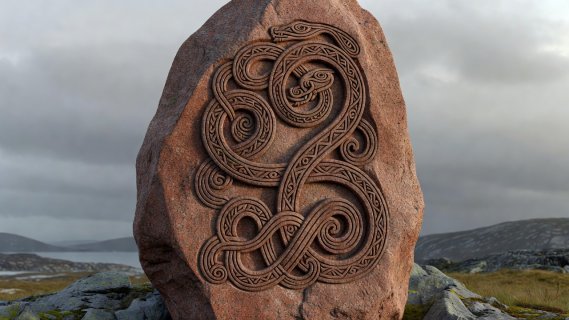 Epigraphic Model: Uppland-Style Granite Stele with Urnes-Style Serpent Knotwork